The 2020 rover as it has been called for some time is an update of the existing 2 rovers we have on mars today. Only one of which is working at all today.
Rover 2020 will arrive in February 2021.
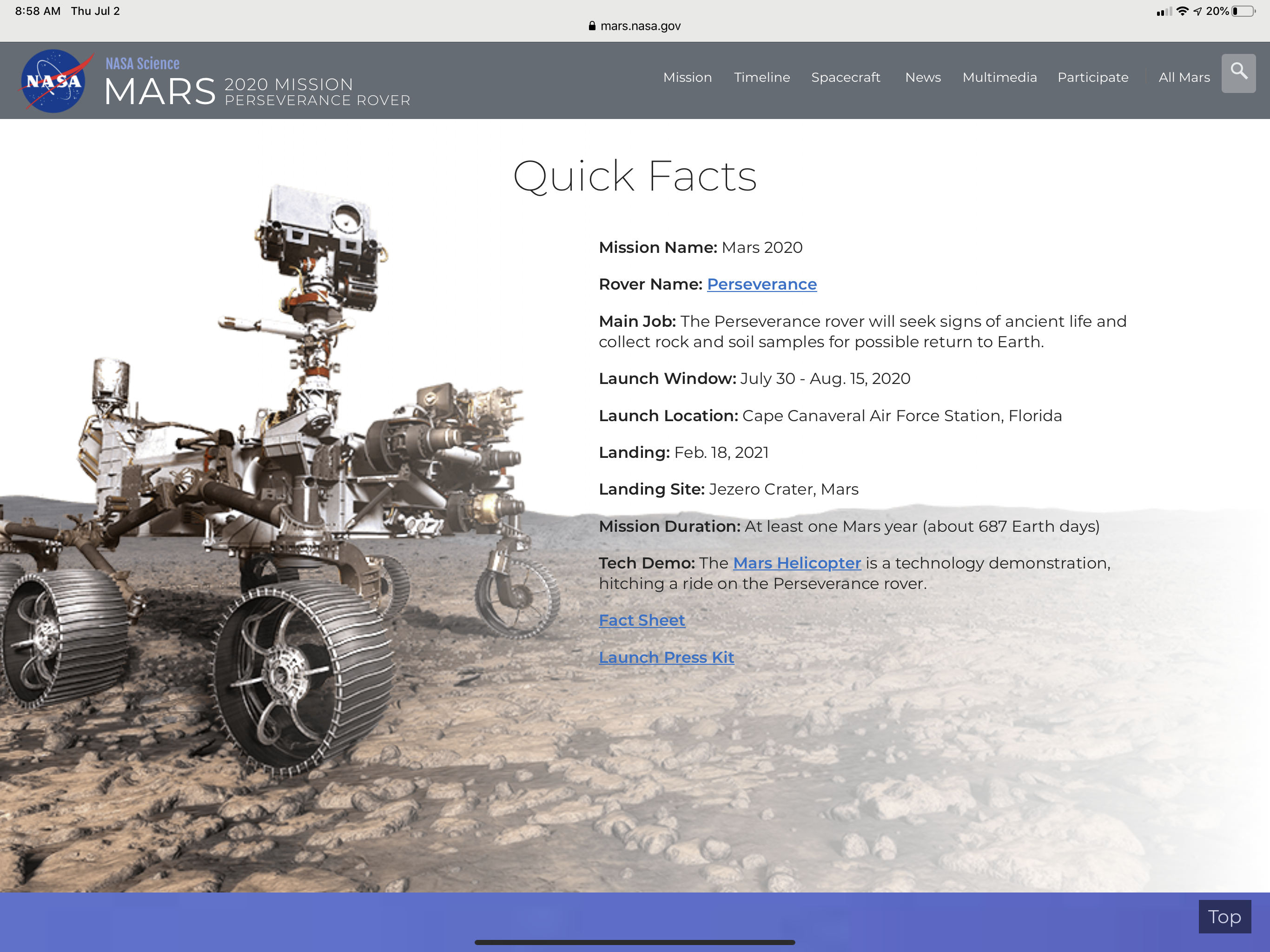
The 2020 rover Perseverance is a huge step up from the existing rovers. The current rovers have a maximum speed of under 2 mph and have very limited power which makes distance travel very difficult. They have not strayed more than a few kilometers from their landing location many years ago.
The 2020 rover has numerous capabilities over the current rover:
- A thermonuclear power source that generates power continuously (about 100 watts) for 30 years or longer
- Up to 5 times faster travel than current rovers with much higher durability including dramatically improved wheels. The ability to traverse the entire surface of mars not just a couple kilometers
- A microwave scanner that can probe up to 500 feet into the ground and determine densities and metal to help us locate the geological structure and materials potentially available over the surface of mars
- Enhanced life experiments which will allow us to do life detection experiments in many locations
- Enhanced drilling, photographing and other experiments
This is the most important mission for eventual additional missions to Mars.
We need to know a lot more about Mars before we go there with people. No one can deny this.
Resources
All the plans for eventual delivery of humans to mars includes doing things like manufacturing fuel (methane) that can be used for a return mission.
Methane is easy to manufacture on mars because all we need is water, co2 and some iron. All these are expected to be available in quantity in many places on Mars.
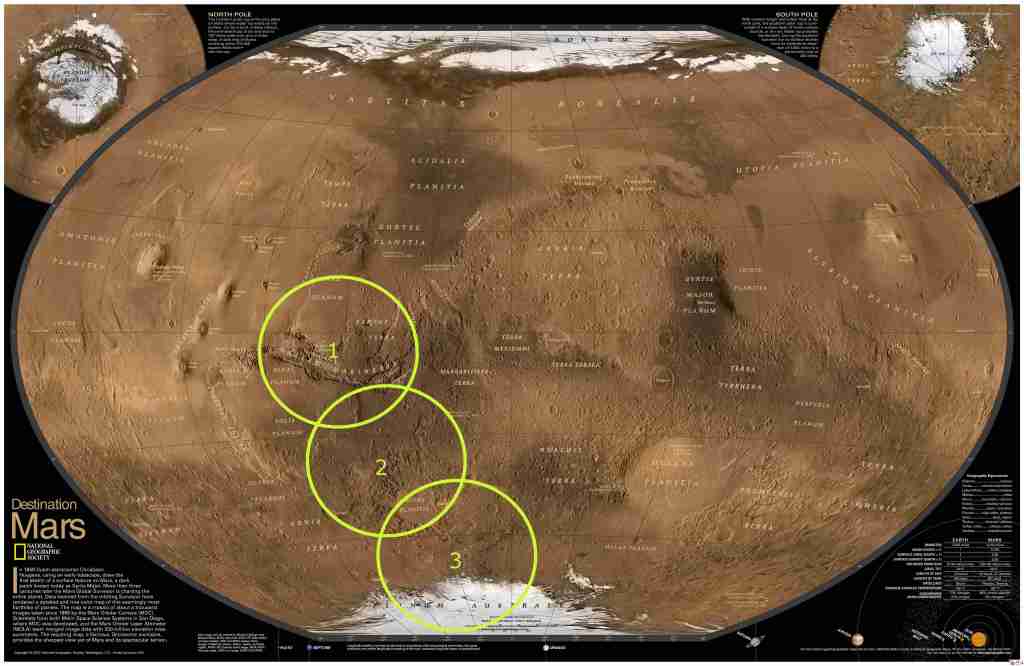
We would want to plant any missions where we go to mars near resources that would be critical for us to determine how to become self-sufficient eventually. Where are locations that could be shielding from radiation or provide materials to facilitate building habitats or supplies and most important Water.
We know there is huge supplies of water at the poles. The total amount of water is estimated to be at least sufficient to cover the entire surface of mars to 100 meters in depth. There is also evidence that water exists under the surface in many places on mars. Access to a plentiful water source would make life a lot easier and facilitate industrial applications.
The 2020 rover can use the microwave instrument as it travels over Mars to determine the small density changes that would indicate caverns under the surface, materials such as iron or water and co2 as well as almost anything else.
We would map these microwave results so we have this database for future mission planning.
This is crucial.
Life
If life exists on Mars we might change the way we explore or deal with manned missions.
Before we introduce our own life to mars it is crucial we have an absolute answer to this question.
We don’t know where life might exist. So far the experiments that have been done have been inconclusive. The Viking missions sent in the 70s provided the best information about life on Mars.
They were contradictory. Some tests showed anomalous results that could be life. One experiment showed that methane was produced from soil on Mars. This is a natural byproduct of living things.
There are also non-organic ways to generate methane. These are improbable and we don’t know what exactly causes this methane.
The new rovers have detected this methane emissions from Mars as well. They have noted that the methane emissions pick up during the day on Mars. We don’t really understand this.
If life exists on mars we need to figure out if we preserve it, what it is, how sensitive it is, is it dangerous to us and many other questions.
We may have to apply much more expensive and difficult sterilization for any missions to and from mars to protect the life there and here.
Without knowing the answer to these questions it makes putting bigger missions to mars very questionable.

This experiment shows an exponential increase in activity seen from soil after injection with water in comparison to the zilch results for the control sample that was sterilized before injecting water.
At the time of Viking in the 70s scientists looked at this data skeptically because the other Viking life experiments didn’t confirm the positive indication of life in this experiment.
However, over time scientists remain unsure and recent measurements from Mars support the experiment of Mars. There is an indigenous creation of methane on mars that is unknown.
If there is life there might be many types of life. It is unlikely there is only one. If there is a fauna then we are going to have to be careful to preserve this. This will limit some activities especially the more grandiose plans might progress and at what pace.
If we discover a non-biological source for this above and no evidence of life using all the experiments this will also give a clear signal that we can do lots and act more brazenly. Things will be cheaper and less procedure with each mission.
So, knowing this questions answer is critical to everything we do subsequently.
The new 2020 rover has enhanced life detection tests. This will hopefully end the debate above one way or another.
The 2025 super rover
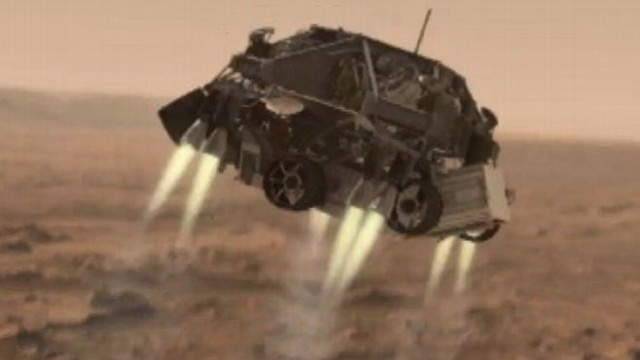
The 2020 rover is a big step from the last rovers but it wouldn’t take much to make what I call a super rover.
We need 9 of these super rovers to launch as soon as possible. I hope NASA is working on them but i haven’t heard anyone mention super rovers.
The 2020 rover as concept is great. It has the basic instruments we need to start really exploring Mars but the 2020 rover is only one and it is still very limited compared to what we need to fully explore Mars.
The super rover is designed to be a lot tougher than the 2020 rover. I expect it will be 2 – 3 times the weight.
We would have 9 of them so they could explore a significant amount of the surface of Mars.
The 2025 super rover includes the following:
- 2 thermofission reactors generating 300 or more watts.
- Top speed of 20mph or more
- Much improved autonomous navigation
- GPS
- Powerful lights
- Enhanced microwave sounding sensor
- Enhanced life tests
- Multiple 4K VR camera’s with 360 degree view
- High speed data communication to overhead GPS satellites
- Heavy duty construction for long duty cycles
- ability to climb 45 degree or higher inclinations or downward slopes.
- 50lbs of c-4 high explosives in 1lb increments
- Drill similar to rover
- Remote arms for manipulating objects and repairs
- Redundant computer systems so the rover can operate on one computer and fix the other
- Spare parts in containers
- Possibly jets to enable hopping on Mars
The main purpose of these rovers is to do long term exploration of mars for life and to discover where all the resources on mars are.
A second part of this mission is to provide extensive GPS accurate maps of “google mars” which would allow future missions and travel with known paths that are safe and easy to traverse.
A third part of this mission is to create years of incredibly detailed lifelike 3D 360 degree virtual reality imagery. This video imagery will enable people on earth to put headsets on and go to Mars as if they were there.
A fourth part would be to perform experiments to determine more about the resources and to test different fabrication technologies and potential for radiation shields.
A fifth goal would be to have really fun explosions on mars using the c-4 we ship.
Just kidding.
The explosive material is actually purposeful. We always use explosives when we want to dig fast. Digging on mars will be problematic until we get much more equipment there. It will also be tediously slow.
Using explosives is a time honored way to expose stuff fast.
Along with the 9 rovers we would launch 12 GPS satellites that would circle Mars and help coordinate all the rovers and the building of the “google mars.”
These GPS satellites would also be part of a high speed communications network to Earth. They would multitask sending information to Earth with 6 of the satellites constantly feeding 4K VR audio visual information from the rovers and other telemetry and remote control.
The GPS satellites are crucial to the rovers. Once we have gps on mars we can start to map and travel safely as well as know where everything is for future robotic exploitation and future experiments on life and minerals.
They double as high speed long range data senders. It is possible we would use a laser transmission system with some intermediary booster possibly that would be backup, buffering and retransmission of Mars data or the ISS could do this.
Stretch goals
Mars is a very mountainous place. It also experiences extreme weather events.
A rover which lasts 30 years and has to explore a large fraction of Mars surface will have to deal with huge dust storms, potentially diving into a caldera or giant holes to see what’s there.
Dust storms on Mars can last up to a year and have winds easily in the 100 to 150 mph range. Since the atmosphere density is 1/100th the earth these winds are not like 100mph winds on earth but they are dangerous.
At the poles of Mars during the transition between winter and summer extreme events occur which cause 400 mph winds and explosions as co2 melts rapidly.
I therefore want to add some things to my wish list for the next generation rover to handle more extraordinary trekking.
- A grapple and hook to be able to deploy and haul itself up very steep inclines possibly even nearly vertical. The hook might need to be explosively deployed. Another use would be to pull itself out of places it got stuck. This might be useful for descending into a caldera.
- Some remote deployable devices to send to places the rover cannot get to. These devices could be passive and simply record when thrown or they might have drone like capabilities. The atmosphere of mars is thin but many have envisioned flying machines. Maybe one or more of the rovers are really drones for flying when the terrain gets too rough.
- Anchor mode. The rover would deploy a pole straight down to anchor itself in case of storm or geologic conditions at the poles required it.
- Protect mode. A way to deploy a bubble around the rover to protect from wind storms. These storms can last for a year and have 100mph + winds. At the poles co2 explodes with its melting producing 400mph+ winds. We would want to observe that and see if we can mine this co2 and water at the poles.
Summary
The 2020 rover about to be launched in a few weeks will be revolutionary in terms of its ability to give us real information about Mars useful for eventual human landing but it by itself is far less than is needed to really do human landings.
This 2020 rover will last much longer potentially 30 – 40 years traversing Mars but it is still too slow and limited.
I hope NASA is already working on the next version of the rover that is along the lines I specify above. It is eminently doable with current technology and these super rovers would answer key questions about life and viability of mars as a second basing point for humanity.
These new rovers will be incredibly cheap compared to any other way of exploring mars and will feed back incredible VR imagery that will bring mars to life for billions of people on Earth without having to travel there.
Things like the explosives would make the missions exciting and fun.
Let’s get going already. Windows to Mars open up every 2 1/3 years or so. So if we can’t make the 2022 launch we want to be ready for 2025.
 SpaceColonization
Leave a comment